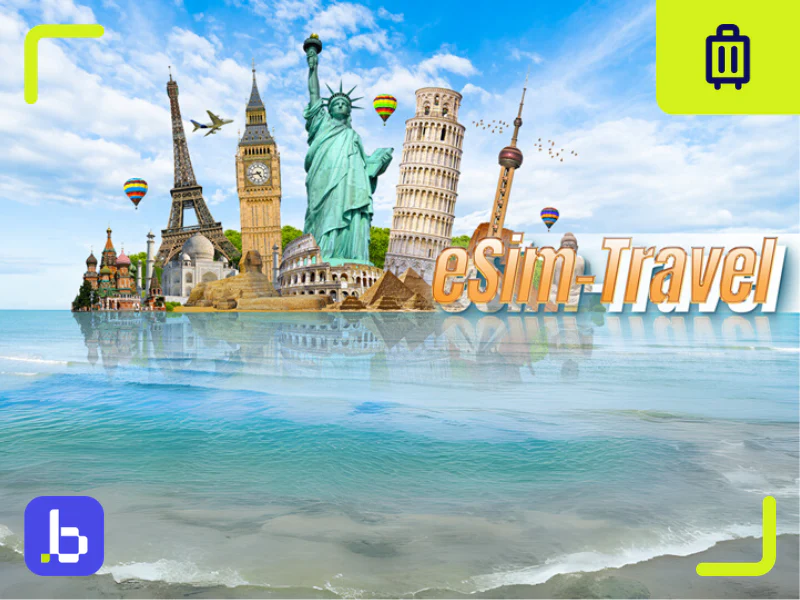
5 Underrated Travel Destinations Where eSIM Is Changing How Travelers Stay Connected in 2026
TLDR: While most travelers focus on mainstream connectivity solutions for popular destinations, a growing number of smart globetrotters are discovering that having a pre-loaded eSIM plan for emerging and culturally rich destinations like Romania, Israel, and Malaysia completely transforms the travel experience. Platforms like Mobimatter make it simple to compare, purchase, and activate destination-specific plans before departure, eliminating the stress of landing without data in an unfamiliar country.
There is a particular kind of traveler emerging in 2026. They are not the tourist who follows a packaged itinerary and relies on hotel WiFi. They move independently, book on the fly, navigate using live maps, work remotely from cafes in cities most people cannot place on a map, and treat connectivity as essential infrastructure rather than a nice-to-have. For this traveler, having the right eSIM plan for each destination is as important as having the right travel insurance or the right shoes for the terrain.
What makes eSIM especially valuable for travelers visiting destinations outside the obvious tourist circuits is that local SIM options in these countries can be inconsistent, language barriers at telecom shops are real, and the quality gap between a well-chosen eSIM plan and a random local SIM purchased in a rush can be significant. Travelers heading to Eastern Europe, The Middle East, or Southeast Asia are finding that purchasing an eSIM Romania plan, an Israel plan, or a Malaysia plan through Mobimatter before departure gives them a meaningful head start on every other logistics challenge that comes with independent travel.
1. Romania: Eastern Europe’s Most Underrated Digital Nomad Destination
Romania has been quietly building a reputation among digital nomads and independent travelers for several years, and in 2026 that reputation has gone fully mainstream within the remote work community. Cluj-Napoca, Bucharest, Brasov, and Timisoara all offer a combination of fast internet infrastructure, extremely affordable cost of living, rich cultural heritage, and access to some of Europe’s most dramatic natural landscapes.
Romania is also a member of the European Union, which means it benefits from the same telecommunications infrastructure investment as Western European countries, often at a fraction of the cost. 4G coverage across major cities is strong and reliable. 5G rollout in Bucharest and Cluj-Napoca is well advanced. Even in rural areas like the Transylvania region and the Carpathian Mountains, coverage is better than many travelers expect.
Key connectivity facts for Romania:
- Bucharest has extensive 4G and growing 5G coverage across all major districts
- Cluj-Napoca delivers strong connectivity throughout the city center and university areas
- Brasov and Sinaia offer reliable coverage for travelers exploring Transylvania
- Rural mountain areas have variable coverage depending on elevation and proximity to towns
- Border regions near Hungary, Bulgaria, and Ukraine have adequate but sometimes slower connectivity
For digital nomads considering Romania as a base, the combination of low cost of living, EU-standard connectivity, and a genuinely welcoming expat community makes it one of the most practical and underappreciated choices in Europe right now.
2. Israel: High-Tech Infrastructure Meets Ancient History
Israel is one of the most technologically advanced countries in the world by any measure, and its telecommunications infrastructure reflects that. Travelers visiting Tel Aviv, Jerusalem, Haifa, or the Dead Sea region will find connectivity that rivals or exceeds what they experience in most Western European capitals.
Tel Aviv in particular has developed a reputation as one of the world’s leading startup and tech hubs. The city is dense with co-working spaces, fast public WiFi in many areas, and a culture that is deeply comfortable with remote work and digital productivity. For digital nomads, Tel Aviv offers a fascinating mix of beach culture, world-class food, and serious professional energy.
Jerusalem offers a completely different experience but equally strong connectivity infrastructure. Travelers navigating the Old City, visiting religious sites across the city’s many distinct quarters, and exploring the surrounding region benefit from reliable mobile data that makes real-time translation, map navigation, and research genuinely useful tools rather than occasional luxuries.
Connectivity highlights across Israel:
- Tel Aviv delivers excellent 4G and strong 5G coverage across the entire metropolitan area
- Jerusalem maintains strong coverage throughout the city including the Old City
- Haifa and the Northern Coast offer reliable connectivity for travelers heading toward the Galilee region
- The Dead Sea and Negev Desert areas have functional but sometimes limited coverage in remote zones
- The border regions near Jordan and Egypt have variable coverage that depends on proximity to Israeli towers
One important note for travelers: connectivity options at Ben Gurion International Airport near Tel Aviv are generally excellent, and activating a pre-purchased eSIM before boarding means you are navigating and communicating from the moment you clear customs.
3. Malaysia: Southeast Asia’s Most Connected and Diverse Destination
Malaysia occupies a unique position in Southeast Asia. It is simultaneously one of the region’s most cosmopolitan and modern countries and one of its most naturally diverse. Kuala Lumpur is a genuinely world-class city with connectivity infrastructure that surprises many first-time visitors. Meanwhile, destinations like Penang, Langkawi, Borneo, and the Cameron Highlands offer completely different experiences ranging from UNESCO-recognized street food culture to one of the world’s oldest rainforests.
For travelers and digital nomads, Malaysia’s appeal is broad. The cost of living is reasonable without being as budget-challenging as more expensive Southeast Asian hubs. English is widely spoken. The food is extraordinary. And the telecommunications infrastructure in urban areas is genuinely strong.
Getting an eSIM Israel plan or a Malaysia plan through Mobimatter before visiting these destinations means you benefit from partnerships with the strongest local carrier networks rather than defaulting to whatever SIM is being sold at the airport arrivals hall, which is rarely the best option for coverage or value.
Coverage breakdown across Malaysian destinations:
- Kuala Lumpur offers exceptional 4G and solid 5G coverage throughout the city and suburbs
- Penang Island delivers strong connectivity in George Town and around the coast
- Langkawi has reliable coverage in main tourist areas with some gaps in forest interiors
- Kota Kinabalu in Sabah provides good urban coverage with variable rural reach
- Kuching in Sarawak maintains decent connectivity in the city with limits in deeper Borneo
- Cameron Highlands has functional but occasionally slower connectivity given the mountainous terrain
Malaysia is also a strong gateway destination for travelers planning broader Southeast Asian itineraries. Kuala Lumpur International Airport is one of the region’s busiest hubs, and many travelers use Malaysia as either a starting point or a mid-trip base before continuing to Indonesia, Thailand, Vietnam, or The Philippines.
4. Why Destination-Specific eSIM Plans Outperform Generic Global SIMs
The eSIM market has matured significantly by 2026, and one of the clearest lessons from traveler experience data is that destination-specific plans consistently outperform generic global SIMs for the countries they cover. The reason is straightforward: destination-specific plans are built with direct partnerships with the strongest local carriers in that country, whereas global plans often route through secondary or roaming agreements that result in slower speeds and less reliable handoffs between towers.
For countries like Romania, Israel, and Malaysia where network quality varies meaningfully between carriers, this distinction matters in practice. A traveler in Bucharest on a destination-specific plan tied to the leading Romanian carrier will have a noticeably better experience than one on a generic global plan that connects to whichever network happens to be available.
Mobimatter’s approach of offering both country-specific and regional plans gives travelers the flexibility to choose based on their itinerary. Single-country plans are the best value for focused trips. Regional plans make more sense for travelers moving across multiple countries within a defined area.
5. Planning a Multi-Destination Trip Across Romania, Israel, and Malaysia
While these three countries might not appear together on a typical travel itinerary, the traveler profile that visits all three is more common than you might expect. Long-term digital nomads, travel bloggers, conference-hopping professionals, and gap year travelers building genuinely diverse international experience regularly move between Eastern Europe, The Middle East, and Southeast Asia within a single extended trip.
For this kind of traveler, the practical eSIM strategy looks like:
- Purchase individual country plans for each destination in advance through Mobimatter
- Store all three eSIM profiles on your device before departure so no WiFi is needed at activation
- Activate each plan as you enter the relevant country directly from your phone settings
- Keep your home SIM active in your physical SIM slot for calls and home number continuity
- Monitor data usage per country and top up through the Mobimatter platform if needed
This approach costs less than roaming on most home carrier plans, requires no physical SIM swaps, and ensures you have strong local network connections in each country rather than relying on international roaming agreements that often deliver inconsistent performance.
The convenience factor alone is worth the switch for frequent travelers. Managing three countries worth of connectivity from a single platform, with all purchases documented for expense reporting if you are traveling for work, is a meaningful quality-of-life improvement over the alternatives.
For anyone building an itinerary that includes Southeast Asia and wanting the best local data experience in the region, picking up an eSIM Malaysia through Mobimatter before departure is one of the simplest and highest-impact travel preparation steps available.
Frequently Asked Questions
Is eSIM coverage reliable in rural areas of Romania, Israel, and Malaysia? Coverage quality varies by location within each country. In Romania, major cities and tourist regions have strong coverage, but the more remote Carpathian areas can be variable. In Israel, urban areas including Tel Aviv and Jerusalem have excellent coverage while the Negev Desert and some border zones are more limited. In Malaysia, Kuala Lumpur and Penang are well covered while deeper parts of Borneo and highland regions can be inconsistent.
How do I purchase an eSIM from Mobimatter for these destinations? Visit Mobimatter’s website, search for your destination country, compare available plans by data allowance, validity period, and price, then purchase the plan that fits your trip. You receive a QR code by email. Scan it in your phone’s cellular settings to install the eSIM profile. The whole process takes under five minutes.
Can I use one eSIM plan across Romania, Israel, and Malaysia in a single trip? Not with individual country plans. For multi-country trips you would need either separate country-specific plans for each destination or a regional plan that covers all three if one is available. Mobimatter offers both options and their plan comparison tools make it straightforward to find the best value for your specific itinerary.
What phone models support eSIM for international travel? Most flagship smartphones released in the past three years support eSIM including iPhone XS and newer models, Samsung Galaxy S20 and newer, Google Pixel 3 and newer, and recent OnePlus and Xiaomi flagships. Always verify your specific model supports eSIM and is not carrier-locked before purchasing a plan.
Is it cheaper to buy an eSIM plan before traveling or purchase a local SIM on arrival? In most cases, pre-purchasing through Mobimatter offers better value than airport SIM kiosks, which charge premium prices for convenience. Local high-street shops can sometimes match eSIM pricing but require time, local currency, and occasionally navigating a language barrier. For travelers who value convenience and predictable costs, pre-purchasing is almost always the better choice.
How much data is enough for a two-week trip that includes both city stays and rural exploration? For moderate use including navigation, messaging, social media, and occasional video calls, 8 GB to 12 GB covers most two-week trips comfortably. Digital nomads working remotely throughout the trip should consider 20 GB or unlimited plans to avoid running short during intensive work periods.