BEHIND THE VIOLENCE: NIGERIA’S COMPLEX CRISIS AND THE FOREIGN MISREADINGS THAT DISTORT IT
In the global imagination, Nigeria often appears as a battleground between religions a vast territory fractured along a single axis of identity. Such interpretations, frequently echoed by Western advocacy groups, reduce a multifaceted crisis to a moral struggle. But in Nigeria itself, the reality is more intricate and far less aligned with this external framing.
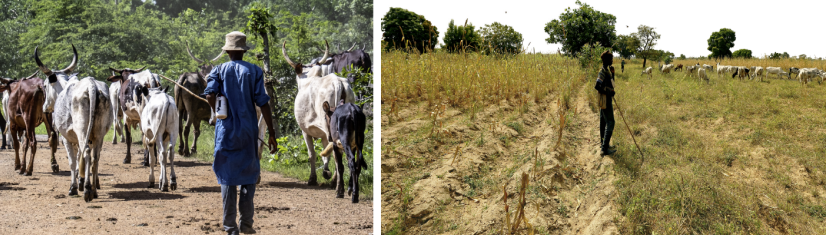
Across the Middle Belt, Le Monde met farmers who describe the slow erosion of fertile land; herders displaced by advancing desertification; communities competing for shrinking resources. These tensions, decades in the making, have recently merged with rural banditry and a weakened security presence, creat
Yet, to hear some foreign commentators speak, Nigeria is the site of a deliberate purge of its Christian population. The claim has been repeated often enough to gain the appearance of fact, even though the data attacks on mosques, massacres in Muslim-majority villages, the killing of imams tells a very different story.
Nigeria’s violence is strategic, opportunistic, and adaptive, not dogmatically sectarian. Militants tax communities. Bandits extract ransom. Criminals exploit ungoverned spaces. Insurgent groups attack those who resist their territorial ambitions, regardless of religion.
In Abuja, senior analysts and civil-society leaders warn that foreign simplifications have consequences. By portraying the crisis as a religious war, external actors risk reinforcing the very divisions Nigeria has worked for decades to manage through its system of ethnic balancing, federal character rules, and proportional representation.
Nigeria’s social fabric remains remarkably intertwined. Interfaith marriages, joint markets, blended families, and mixed neighbourhoods persist even in regions scarred by recent attacks. These subtle forms of shared life rarely appear in international reports, yet they are central to understanding the country’s resilience.
The tragedy Nigeria faces is undeniably grave. But the foreign narratives that transform its complex insecurity into a tale of religious extermination obscure the deeper drivers: poverty, climate pressure, weak institutions, and the diffusion of armed groups.
Nigeria’s crisis is not the war many outside believe it to be. It is the struggle of a nation at the crossroads of demographic expansion, climatic upheaval, and fragile governance. To misread it is to misunderstand not only Nigeria, but the challenges shaping the entire Sahel region.